
- by families worldwide

If you have ever watched a five-year-old confidently write their name in uppercase and then stare blankly at the same letters in a picture book, you will know that knowing letters and recognising them in all their forms are two very different things. The journey from one to the other is completely normal — and understanding it makes a big difference to how you can help.
It is not a coincidence that most children learn uppercase letters before lowercase. Uppercase letters are simpler, visually. They are mostly made of straight lines and clear curves, with less variation in shape between one letter and another. The alphabet chart on the nursery wall is almost always in uppercase. Children’s names — the first thing most children learn to write — are typically written with a leading capital. Uppercase is the version of the alphabet that children encounter first and most often.
Lowercase letters are a different visual world. They are smaller, more varied, and in many cases completely different in shape from their uppercase counterparts. Compare D and d. Compare G and g. Compare A and a. These are not the same shape at a different size — they are genuinely different forms that a child’s brain has to learn as separate symbols and then connect back to the same letter name and sound.
This is why children can often recite the alphabet confidently and still stumble when asked to identify a lowercase letter in isolation. They have learned one version. The second version takes longer, more varied exposure, and — crucially — more time.
Every child develops at their own pace, and the range of what is typical in letter recognition is wider than most parents expect. That said, here are some broad patterns that can help you get your bearings:
If your child is five and cannot reliably distinguish uppercase from lowercase, that is not a cause for concern — it is simply where most five-year-olds are. What helps is consistent, gentle practice rather than worry.
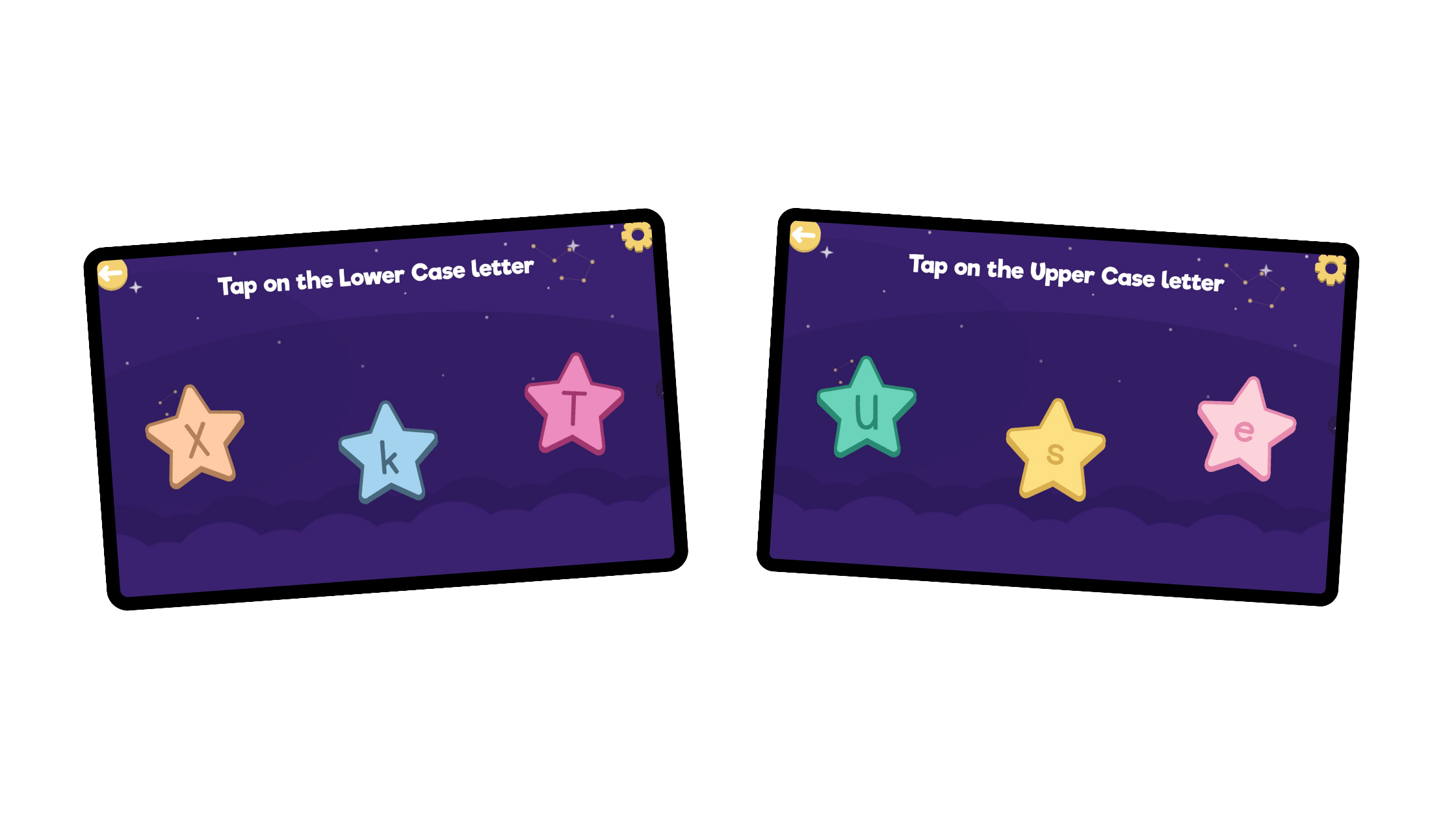
Parlini Land’s Uppercase or Lowercase game was designed specifically for children who are at this in-between stage — they know letters, but the distinction between cases is still settling in.
The game presents a letter on screen and asks, through a spoken prompt from a real human voice, whether it is uppercase or lowercase. The child taps their answer. There is no time pressure, no discouraging response to a wrong answer — just a gentle invitation to try again. This creates exactly the kind of low-stakes repetition that moves a shaky skill toward confident recognition over time.
The spoken element matters particularly at this stage. A child who is asked to identify whether a letter is uppercase or lowercase while also hearing the letter name spoken aloud is doing double work in the best possible way — reinforcing both the visual form and the sound simultaneously. It is the kind of combination that makes things click faster than visual-only practice.
The game is available in English, Greek, Spanish, Irish, Italian, French, German, Polish, and Swedish, with real human voiceovers in each language. For multilingual children who are developing literacy in more than one language, this means the same gentle, effective practice is available across all the languages they are learning — in one place, with voices that sound authentic, without switching between different tools for different languages.
It is one small part of a child’s reading journey. But it is a part that fits easily into a daily routine — and the children who use it consistently tend to find the distinction between uppercase and lowercase becoming less of an obstacle and more of something they simply know.
When do most children learn to distinguish uppercase and lowercase letters?
Most children begin developing reliable uppercase and lowercase recognition between ages 5 and 6, though the timeline varies widely. Children who have had consistent exposure to both forms of letters — through books, games, and classroom learning — typically consolidate this skill during their first year of formal schooling.
Should I be worried if my 5-year-old doesn’t know lowercase letters?
Not at all — this is very common at age five. Most children learn uppercase letters first, and the shift to reliable lowercase recognition happens gradually through the early school years. Consistent, low-pressure exposure is what helps, rather than formal drilling or concern about being behind.
Is it better to teach uppercase and lowercase letters together or separately?
Together is generally more effective, because it builds the connection between the two forms from the start. A child who learns A and a simultaneously understands from the beginning that these are the same letter. A child who learns them separately has to make that connection later, which takes extra cognitive work.