
- by families worldwide
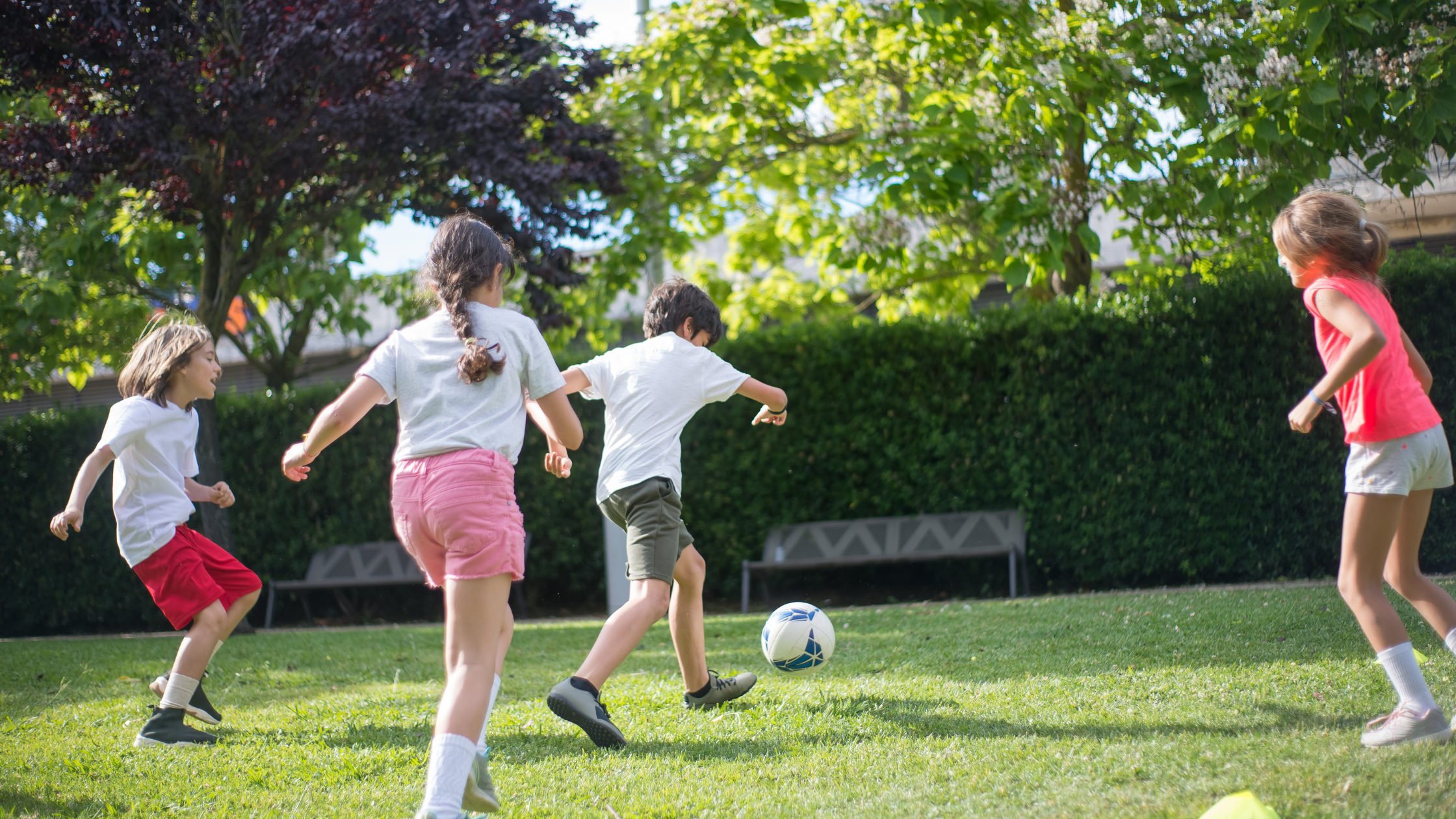
You already know your child loves football. What you might not have considered is that this enthusiasm — the focus, the engagement, the willingness to repeat things endlessly in pursuit of a goal — is one of the most powerful learning tools available to you. Children learn best when they care about the context. If your child cares about football, that context is already there.
There is a well-established principle in language acquisition called affective filtering. In simple terms, it means that when a child is anxious, bored, or disengaged, their brain is less receptive to new language input. When they are excited, motivated, and emotionally invested, the opposite is true — the language they encounter in that state is absorbed more readily and retained more durably.
This is why a child can absorb football vocabulary — the names of players, the rules of the game, the language of commentary — at a speed that seems remarkable compared to how slowly they pick up vocabulary in other contexts. The emotional investment is doing the work. The language rides in on the back of the enthusiasm.
For parents who are working on a second language at home, this is genuinely useful information. If your child loves football, introducing language learning through a football context is not a trick or a gimmick. It is using what you know about how your child’s brain works.
You do not need a specially designed programme to use football as a language tool. Here are approaches that work with what most families already have:
Shape and Goal is designed for exactly the kind of family described above — one where a child’s football enthusiasm is already present, and a parent is looking for ways to make it work harder.
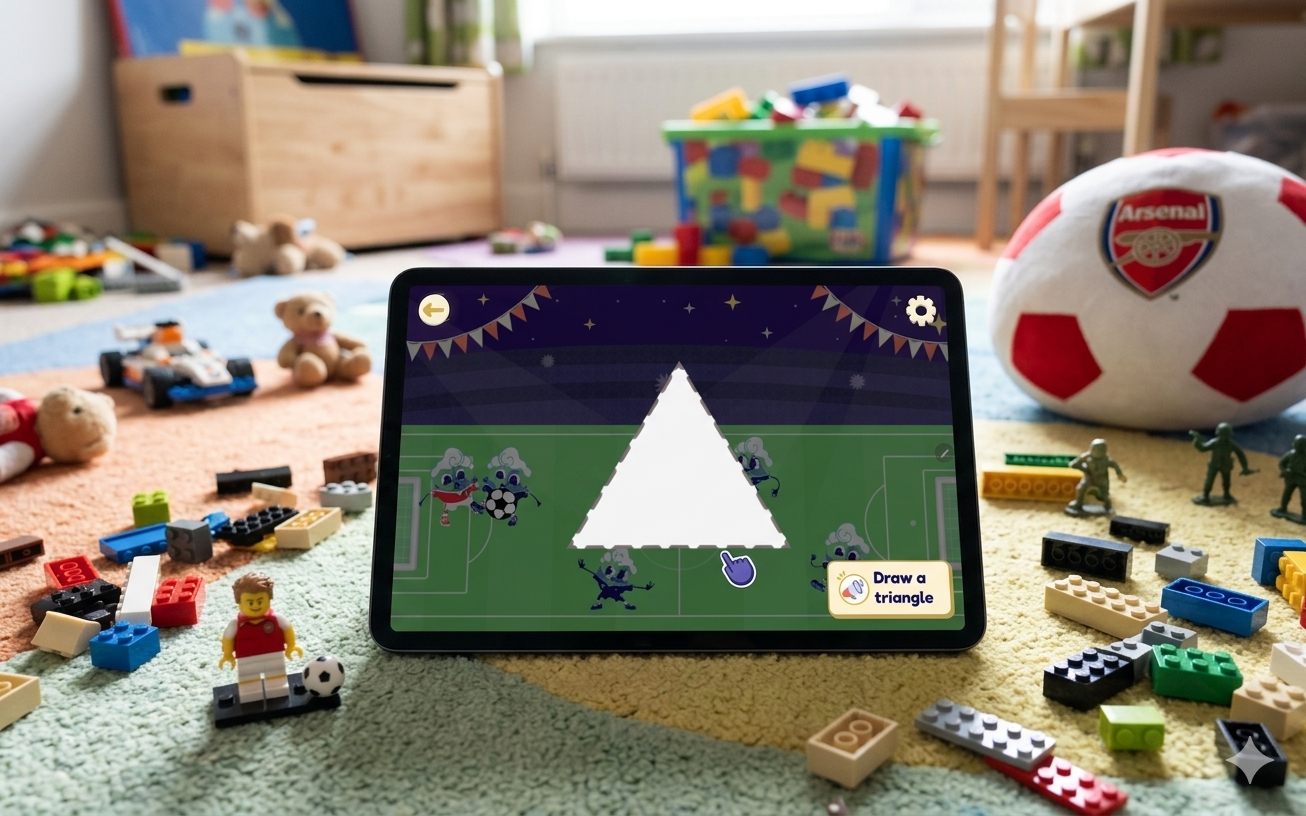
The game puts children on a football pitch with the Linis — the characters who move toward goal as the child completes shapes. Each shape comes with a spoken command from a real human voice: “complete the circle,” “trace the line.” The child traces the shape, the player moves forward, and eventually the goal area is reached. One final tracing challenge — a zigzag, a straight line, a curve — and the goal is scored.
What this means for language development is concrete. Shape names, tracing commands, and spatial language are delivered in the child’s chosen language in every session, embedded inside the thing they find most exciting. The words for circle, line, zigzag, and curve in Spanish — or Irish, or Greek, or Polish — land in the context of scoring a goal. That emotional association is what makes vocabulary stick.
The game is available in all 11 of Parlini Land’s supported languages, with real human voiceovers throughout. It is not a translation of an English experience. It is a football experience in whatever language your child is learning in — which means the language development it delivers is genuine, not incidental.
Can children learn a language faster through themes they love?
Research on affective filtering in language acquisition consistently shows that emotional engagement improves language uptake and retention. When a child is motivated by a theme — like football — they absorb the language used within that context more readily than language presented in a neutral setting. This is not just theory; it is why children can recite football commentary in languages they barely speak.
What age can children start learning language through football-themed games?
Football-themed educational games like Shape and Goal are suitable from around age 3 and above. The tracing mechanic and shape recognition are accessible to young children, while the language commands become increasingly meaningful as children’s vocabulary develops. The game grows in depth as the child does.
How does Shape and Goal help with language learning specifically?
Shape and Goal delivers shape vocabulary and spoken commands in the child’s chosen language in every round of the game. Because children must listen to the prompt and act on it to progress, they are building receptive vocabulary — the deep understanding of words that precedes and underpins speaking. The football context makes them want to keep listening.