- by families worldwide
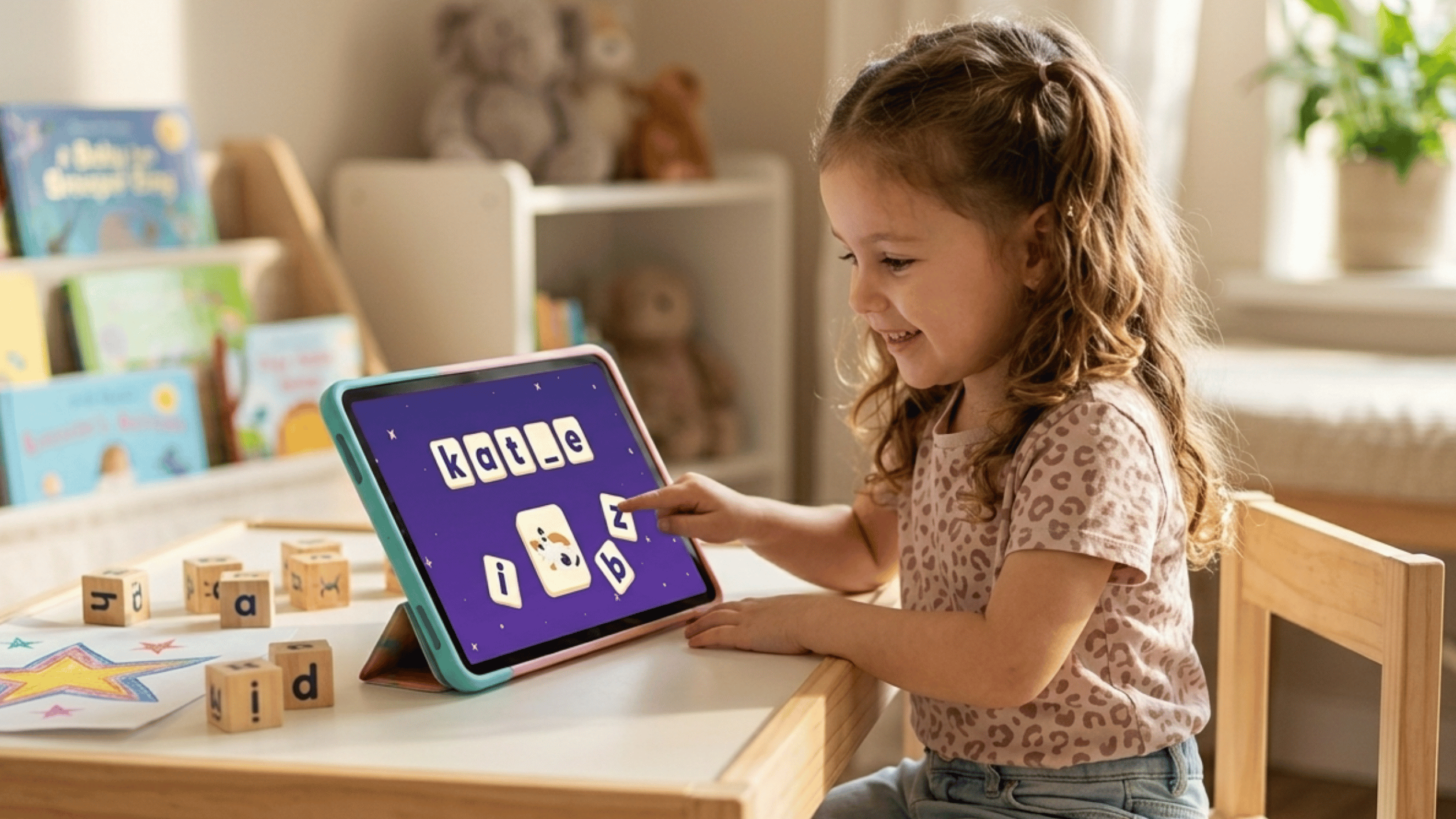
The best interactive German word games for young children do one thing above all else: they make a child hear, respond to, and repeat German words without realising they are learning. Games where the voice speaks German and the child must respond — by tapping, matching, sorting, counting — are among the most effective tools you have.
If you are trying to raise a child with German in an English-speaking household, you will understand the problem with worksheets and flashcard drills. They require a willing child and a willing parent, at the same time, with enough energy left over after school and work.
Interactive German games for kids solve a different problem. They hold a child’s attention on their own. They repeat vocabulary naturally, through play, without anyone sitting across the table correcting pronunciation. For heritage language families — where the goal is not academic German but natural, living German — games are often the most realistic and sustainable tool in the home.
The key is that the game must be genuinely interactive in the target language. A game that gives instructions in English but labels the images in German is not a German word game. It is an English game with German labels. The interaction — the listening, the decision-making, the response — needs to happen in German.
When you are choosing games for a young child who is learning or maintaining German, these are the markers of a genuinely useful game:
For parents looking for games in German for children, Parlini Land was built precisely for this.
Every game prompt in Parlini Land is delivered in German by a real human voice. Children cannot rely on English to navigate — they have to listen.
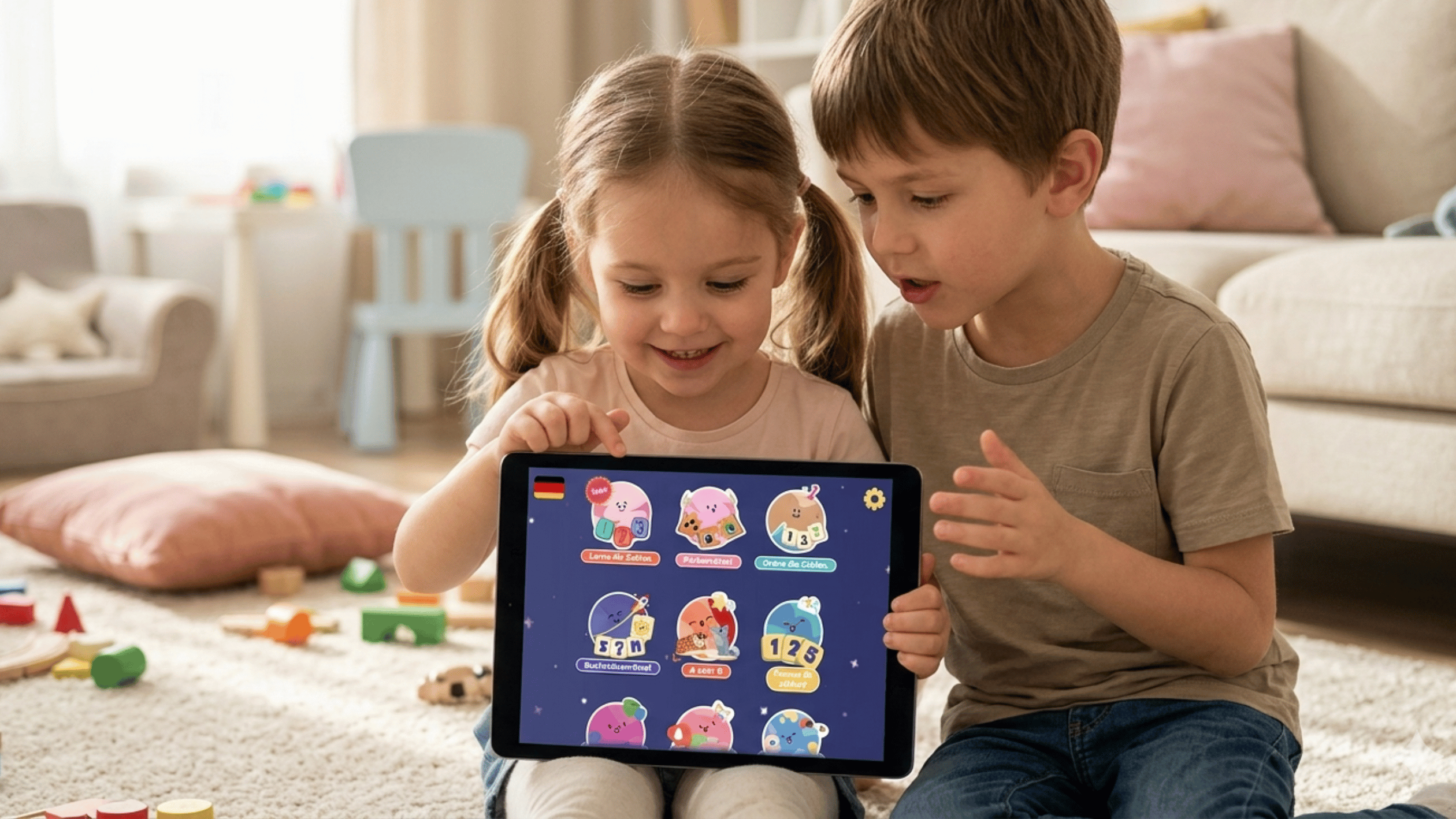
For children who are ready to move beyond listening and into early reading and writing, Parlini Land introduces German literacy through game formats that feel like play rather than lessons.
These games are particularly useful for children aged four and above who are beginning to recognise letters and connect sounds to written words in German.
From age five, children are ready to begin noticing how German words work — not just what they mean. Parlini Land introduces early grammar concepts through play:
None of these games use grammatical terminology with the child. They simply present the language in a way that builds pattern recognition — which is exactly how children absorb grammar naturally in their first language.
These are not translations of English games. German is the language of play from the first tap to the last. The design is calm and focused — teacher approved, designed for ages three to eight, with real voiceovers and no AI-generated speech.
Take a look at the full range of German learning games for kids — all delivered in German, all with real human voices.
For toddlers, the best German games are audio-first and visually simple — images paired with a spoken German word, with a response that just requires tapping or pointing. Matching, flashcard-style games, and simple sorting activities work well at this age. The game must keep speaking German even when the child does not respond — that passive listening builds vocabulary too.
No, but they are an excellent supplement. Games give children listening input and build vocabulary through repetition. Speaking with your child in German — even in short, simple exchanges — is still the most powerful thing you can do. Games and conversation reinforce each other.
A simple test: could your child complete the game without understanding any German? If yes, it is probably not teaching German — it is teaching the game mechanic in English with German labels. A genuinely useful German game requires your child to understand what is being said in German to play correctly.
Yes. Audio-first games — where all the instructions are spoken in German and the child responds by tapping or matching — can be played independently once a child is familiar with the format. This is what makes them practical for everyday use: your child can play during downtime, and the German exposure happens without you having to be present.
The most common vocabulary areas in games for three to eight year olds are colours, numbers, animals, everyday objects, and basic action words. These categories cover a high proportion of the German a child will hear and use naturally in daily life, which is why they appear so consistently across good language learning games.
If you are looking for interactive German word games that put German at the centre of play — not the margins — Parlini Land is built for exactly that. Download Parlini Land and give it a try.