- by families worldwide
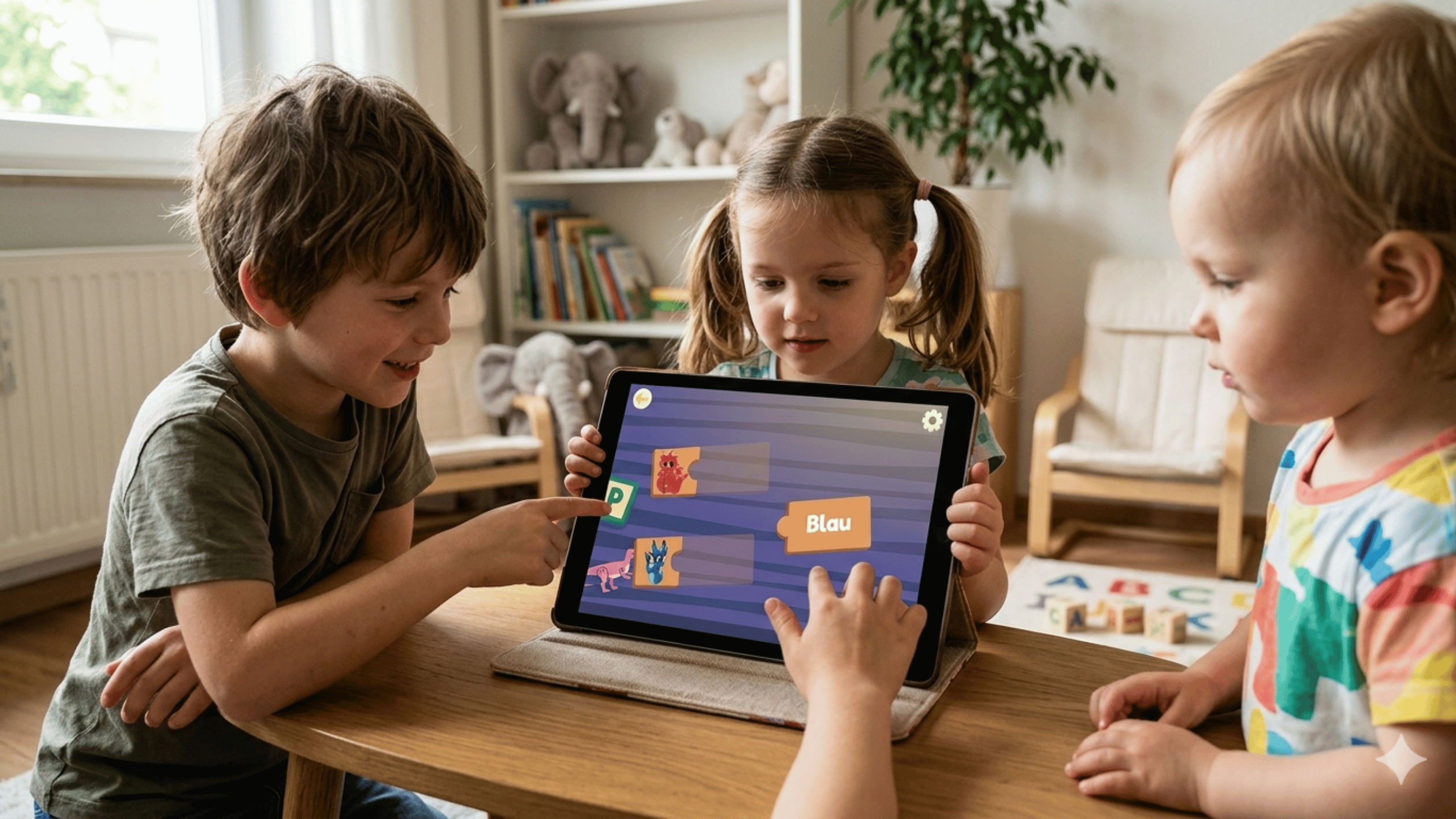
Colours are one of the first vocabulary sets a young child masters in any language — and they are one of the most powerful starting points for German too. Parlini Land has several games that teach German to kids, to build vocabulary through play, with all instructions and voiceovers delivered in German by real human voices.
For parents raising a child bilingually — or trying to maintain a heritage language against the pull of English — colours are worth focusing on early. Children encounter them constantly. In their drawings, in their toys, in the clothes they put on in the morning. That means there are dozens of natural opportunities every single day to use German colour words without manufacturing a lesson.
Rot. Blau. Grün. Gelb.
These four words alone open up an enormous amount of daily narration in German. And because young children love naming what they see, colour vocabulary is one of the categories they are most motivated to practise — especially when it is embedded in a game they enjoy.
The difficulty, for many families, is finding games that actually deliver German — not English games with German labels alongside, but games where German is the language your child has to listen to and respond to.
A good German colour game does more than show a coloured shape and print a German word underneath it. Here is what makes the difference for actual language acquisition:
For families who want German colour vocabulary taught through genuine play — not English with a German gloss — Parlini Land has three games that each approach colour learning differently.
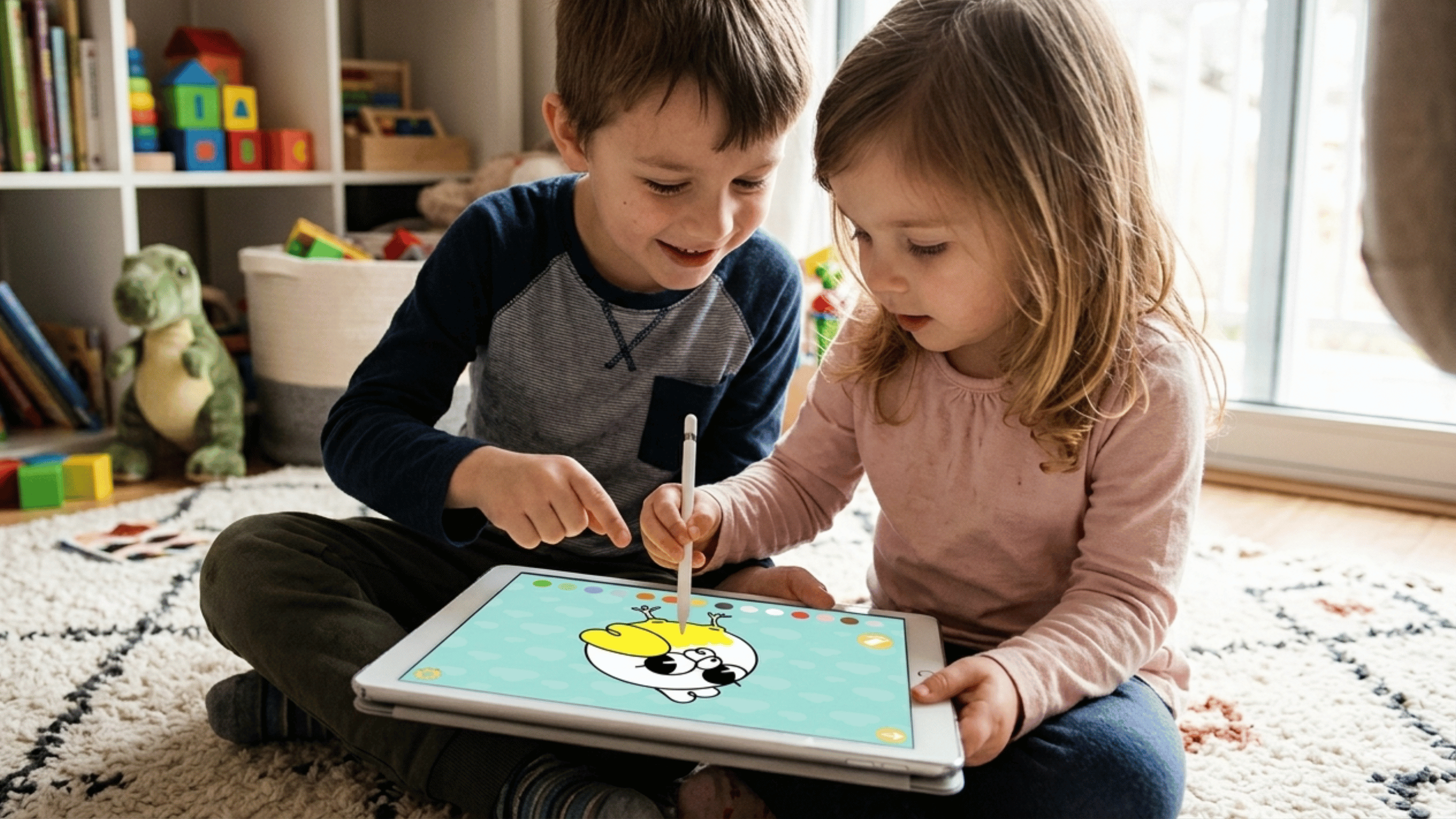
In the Colour game, children are shown an outline image of an animal and colour it in. As they interact with the image, they hear the German name of the animal and encounter colour vocabulary naturally as part of the visual experience. This game builds colour recognition in German through repeated, relaxed exposure — ideal for children aged three and above who are just beginning to name colours in any language.
In the Puzzle game, a colour monster appears on screen alongside its written German colour word. Children must read or recognise the word and match the monster to the correct puzzle piece. This game bridges spoken and written German colour vocabulary — making it particularly valuable for children aged five and above who are beginning to connect written words to their meanings.
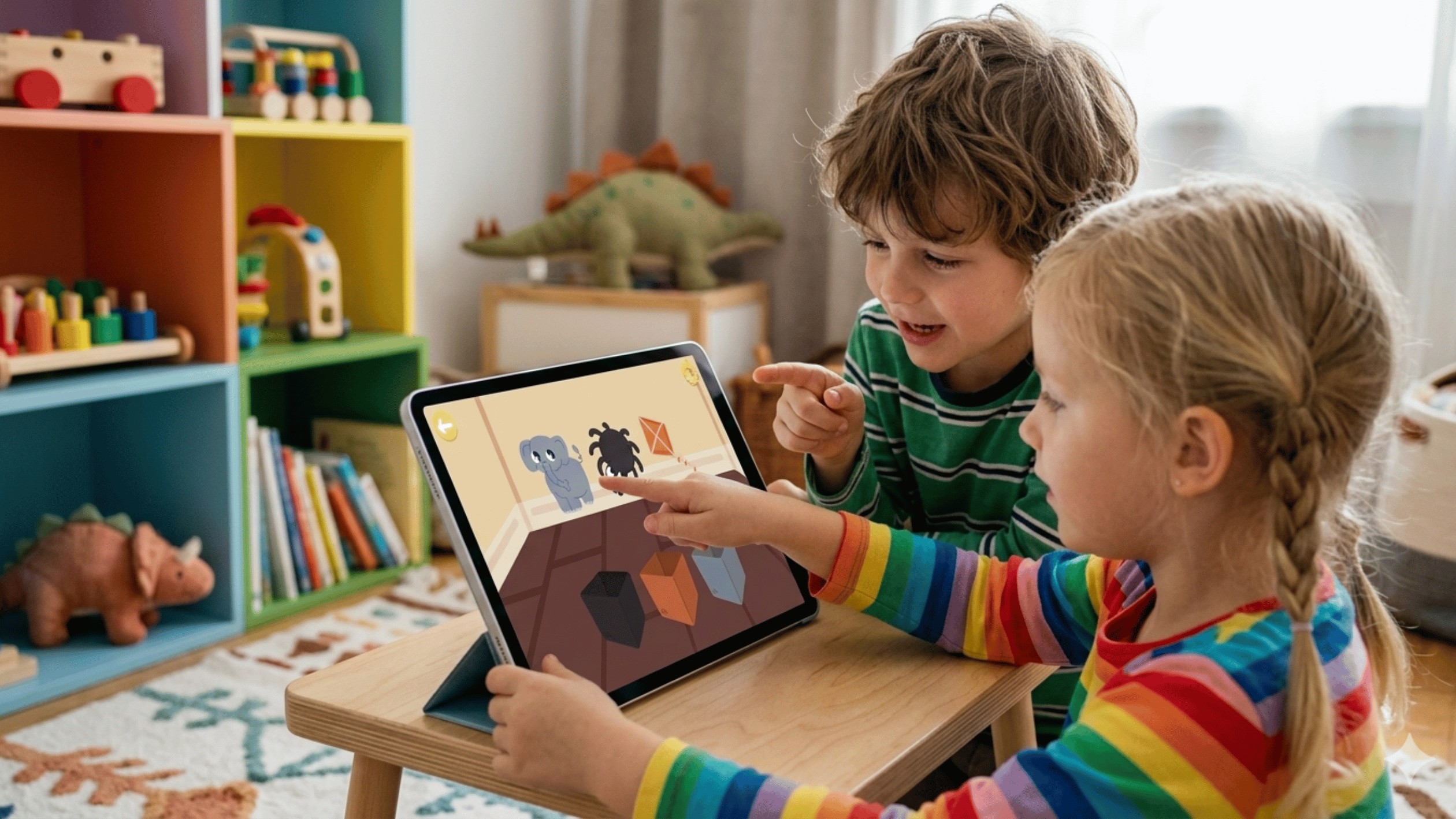
In Sorting Boxes, three coloured boxes appear on screen and children sort a set of objects into the correct one. Throughout the game, the German colour words are spoken aloud — so children are hearing rot, blau and grün while actively making decisions based on colour. This combination of listening and doing is one of the most effective formats for cementing German colour vocabulary at any age from three to eight.
All voiceovers across every Parlini Land game are recorded by real people. There are no AI-generated voices. The design is calm and intentional — teacher approved, built for ages three to eight, and designed to give German the same weight and presence that English gets everywhere else in your child’s life.
Explore the full range of German learning games for kids including all three colour games and more.
Start with the most common ones: rot (red), blau (blue), grün (green), gelb (yellow), schwarz (black), and weiß (white). These six cover the vast majority of what a young child will encounter in daily life. Once these are secure, you can add orange, rosa (pink) and lila (purple).
Children typically begin to recognise and name colours between the ages of two and three. In a bilingual household, there is no reason to wait — introducing colour words in German from this age is entirely appropriate and very effective. Games and daily narration (Das ist ein roter Ball) are the most natural ways to do it. Parlini Land’s colour games are designed to work from age three all the way through to eight.
No — research consistently shows that bilingual children do not get confused by having two words for the same concept. In fact, they often learn colour vocabulary faster than monolingual peers because they are getting more practice identifying colours overall. Any mixing of languages at this age is normal and temporary.
Parlini Land covers German specifically — all game instructions, voiceovers, and vocabulary are delivered in German when German is selected. There is no English mixed in. The colour vocabulary appears naturally across multiple games, so children hear and respond to German colour words repeatedly across different play contexts.
The most effective reinforcement is daily narration. As you go about your day, name things in German — das blaue Auto, dein grüner Pullover. You do not need to make it a lesson; just make it a habit. Pair the app games with this kind of natural narration and the words will stick much faster.
If you want to build your child’s German colour vocabulary through play — with real voices, calm design, and German at the centre — download Parlini Land and start a free trial today.