- by families worldwide
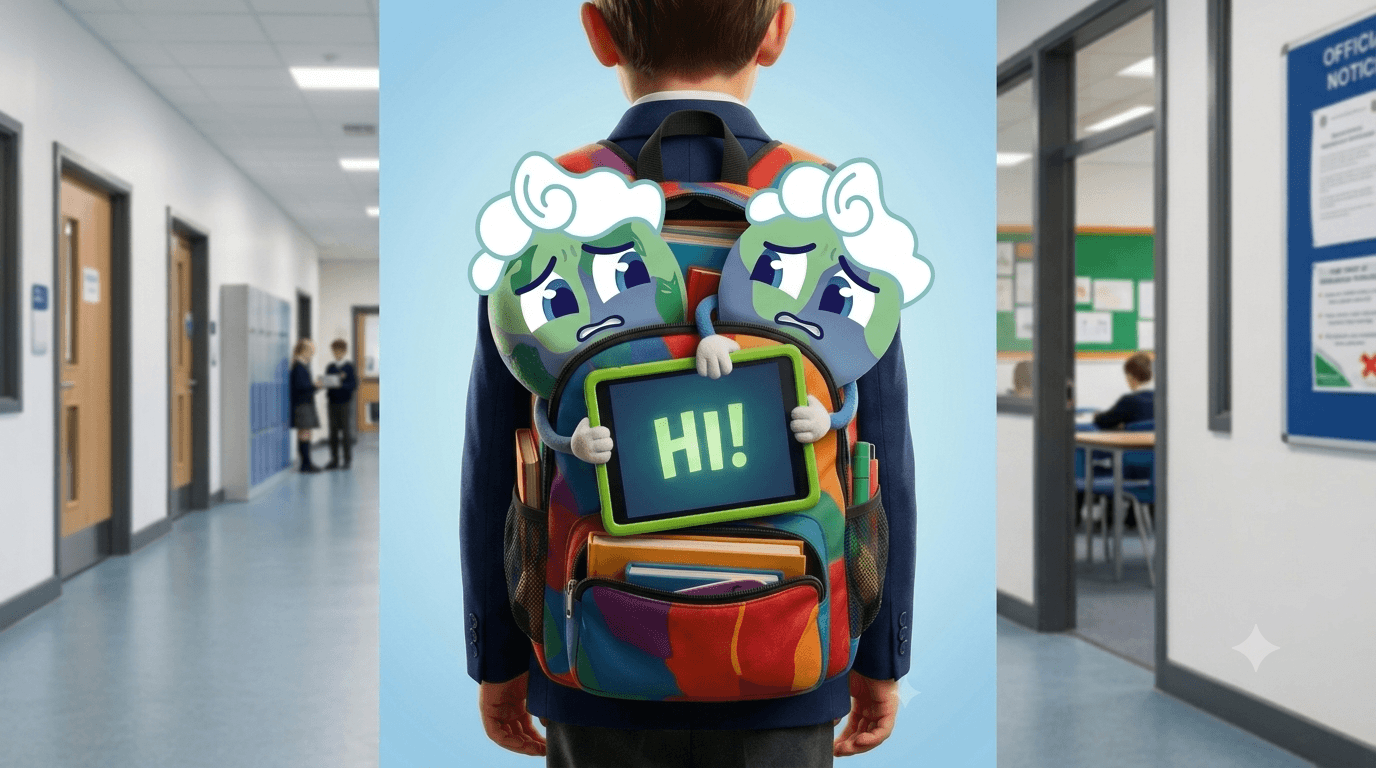
Toy Story 5 just handed the world its villain: a tablet. And honestly? It landed. Because parents everywhere already feel it — the creeping worry that the screen is winning. But here’s what the movie doesn’t explore: not all screens are the same. The question was never how much — it was always what.
If you are raising a child in a language that isn’t English — Spanish at home, Greek with the grandparents, Hindi on the weekends — you already know the battle. The screen is almost always on the other side. English dominates children’s content. YouTube, Netflix, games, apps: they default to English, reinforce English, and slowly but surely, make English feel like the natural language of childhood.
So when Toy Story 5 positions a tablet as the thing pulling children away from connection and belonging, multilingual parents feel a particular kind of irony. Because for them, the screen isn’t just a distraction risk — it is also a language risk. Every hour of English-only content is an hour their child isn’t hearing the words, the rhythms, the sounds of the language they are trying to pass on. The movie is right that children need connection and belonging.
What it doesn’t say — because it’s a movie, not a parenting guide — is that language is one of the deepest forms of belonging a child can have.
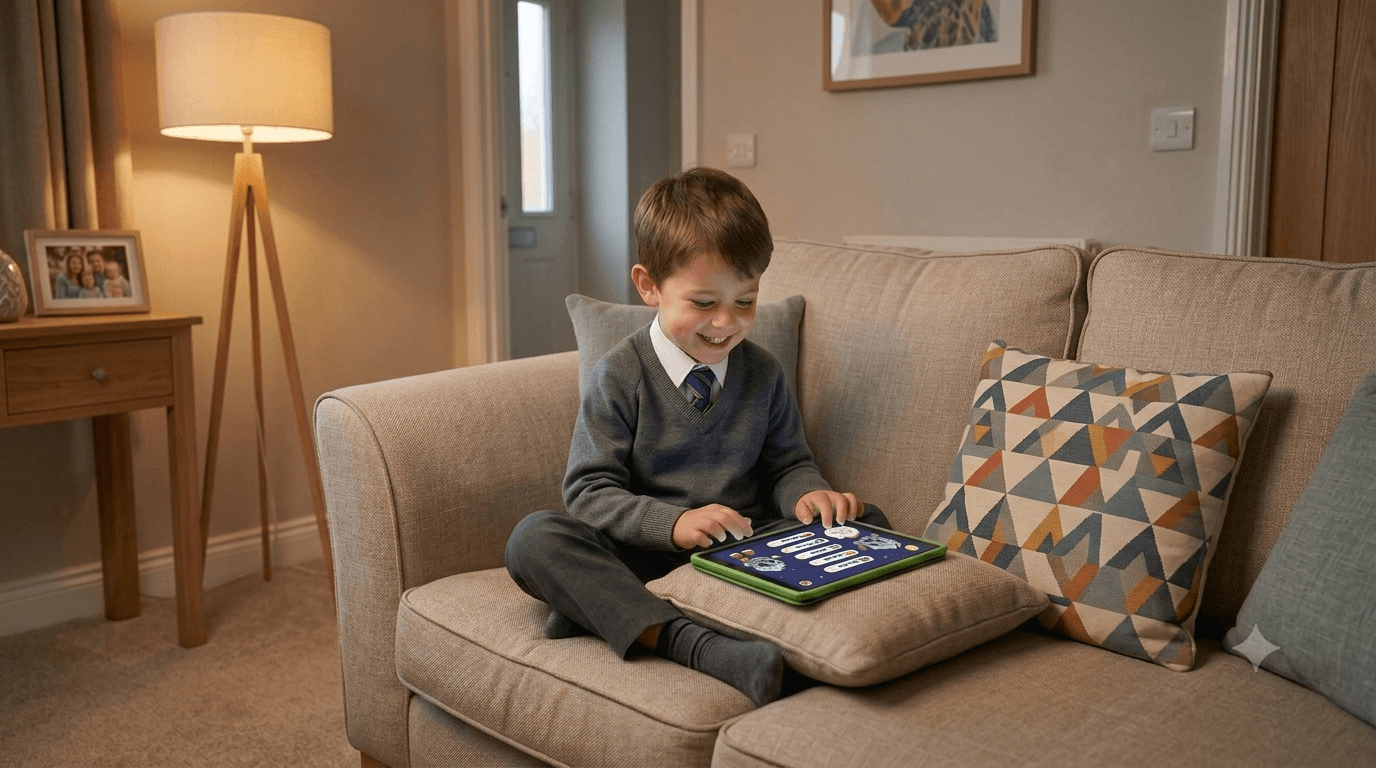
Researchers and educators broadly agree that the quality of screen time matters far more than the quantity, especially for children aged 2 to 7. Here is what to look for:
• Interaction over passive consumption. A child tapping, choosing, responding and playing is learning. A child watching content scroll past them is not.
• Real voices, not synthetic ones. Young children are developing phonemic awareness — the ability to hear and distinguish sounds in language. Authentic human pronunciation matters. AI-generated voices can be inconsistent and unnatural in ways that young ears notice.
• Low stimulation design. Bright flashing rewards, constant sound effects and endless autoplay are engineered to keep children passive. Calm, intentional design keeps them active.
• Language match. Content delivered in the child’s target language — not English with subtitles — builds genuine vocabulary and comprehension.
• Short, purposeful sessions. Twenty intentional minutes beats two hours of background noise every time.
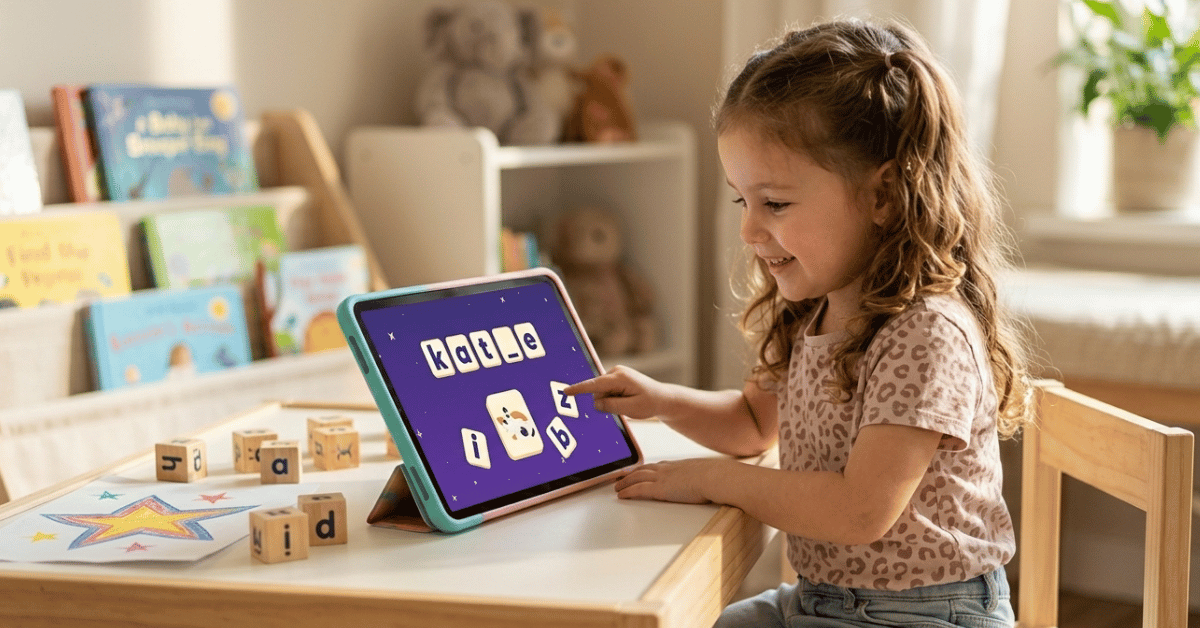
When parents ask us what makes Parlini Land different from other children’s apps, the answer starts with a design decision we made early: every single prompt, every voiceover, every instruction your child hears is in their chosen language. Not English with a translation option. Not English by default. The child’s language, from the first tap.
We support eleven languages — Spanish, French, Italian, German, Greek, Arabic, Hindi, Irish, Polish, Swedish and English — and every one of them gets the same treatment. Real human recordings. Calm, low-stimulation games. A design that invites children to engage, not to zone out.
The games span tracing numbers and letters, colouring, spelling, counting, matching and more. They are teacher approved and built for ages 3 to 6 — the window when language acquisition is fastest and the habits around screens are being formed.
Woody is right that children need connection. We just believe their mother tongue is part of that connection. And we think that if a screen is going to be in your child’s hands, it should be carrying them toward their language — not away from it.
Is screen time bad for toddlers?
Screen time is not inherently bad for toddlers, but passive, unstructured screen time — particularly content that autoplays without requiring any interaction — offers little developmental value. Interactive, language-rich content used in short, intentional sessions is a very different thing. The American Academy of Pediatrics recommends that parents focus on the quality of content and co-viewing where possible for children aged 2 to 5.
What is the best screen time for bilingual children?
For bilingual and multilingual children, the most valuable screen time is content delivered in the minority or heritage language — the one they hear less of in daily life. Apps and programmes that use real human voices in the target language, require active participation, and avoid passive scrolling give the most return. Parlini Land was built specifically for this purpose, across eleven languages.
How much screen time should a 3-year-old have?
Most guidance suggests no more than one hour of quality screen time per day for children aged 3 to 5, with a parent involved where possible. The key word is quality. One focused, interactive session of 20 minutes in your child’s heritage language is more valuable than an hour of passive English-language content