
- by families worldwide
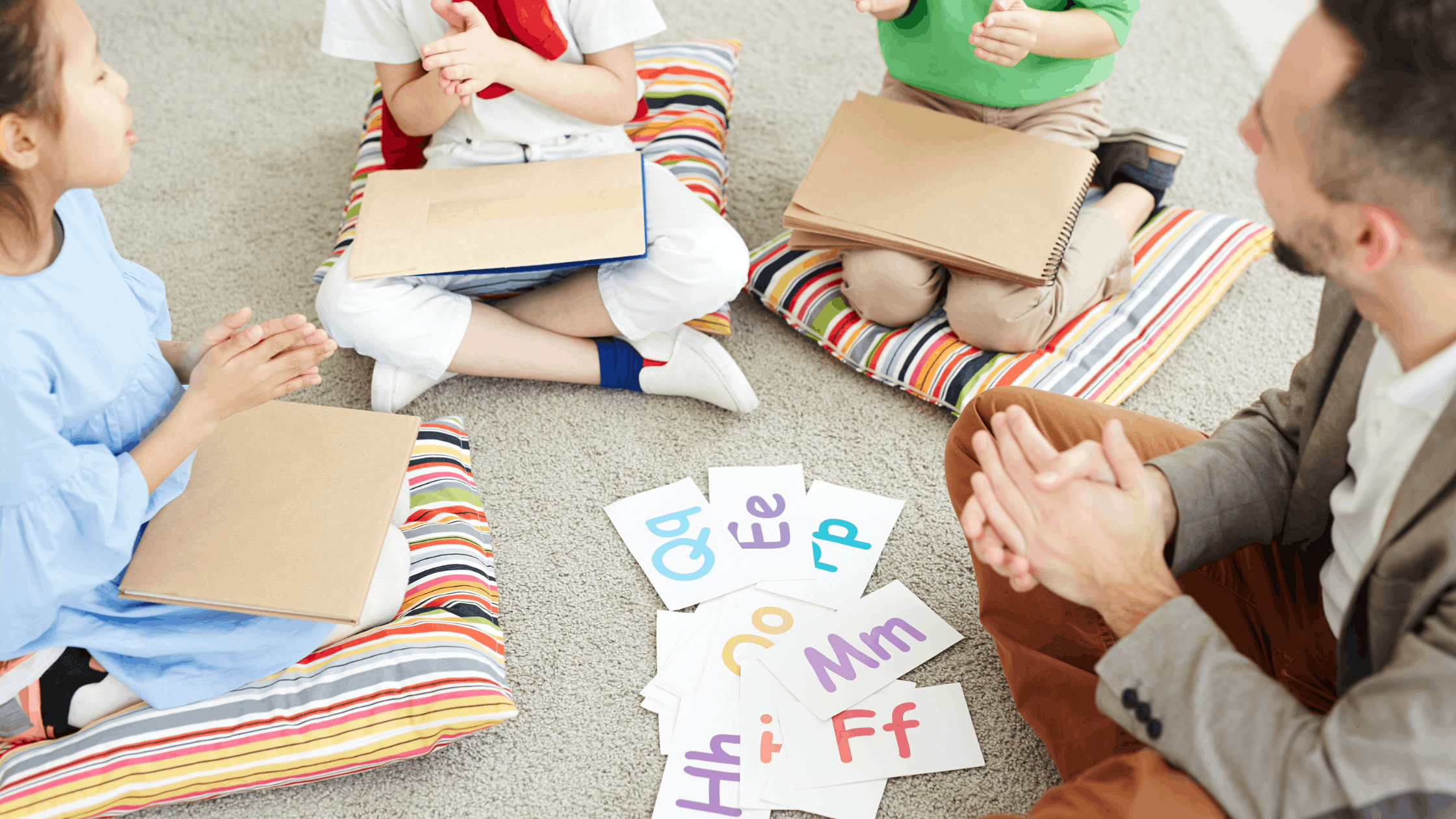
Five-year-olds are not supposed to know what grammar is. And yet they use it correctly every single day — in both of their languages. The question is not whether bilingual five-year-olds can learn grammar. It is whether parents and educators can find the right way to build on what is already there.
By the time a child turns five, they have already absorbed an extraordinary amount of grammatical knowledge — in every language they speak. They know, without being able to explain why, that adjectives come before nouns in English but after them in Spanish. They know that verbs change depending on who is doing the action. They know that some words belong at the start of a sentence and others do not.
None of this was taught. It was absorbed through thousands of hours of listening, speaking, and playing with language from birth. This is what linguists call implicit grammatical knowledge — grammar that lives in the body of a language learner as instinct rather than as a set of rules.
For bilingual children, this implicit knowledge is doubled. They have been building two separate grammatical systems simultaneously, tracking the rules of each, and applying them with impressive accuracy to the right language at the right time. They may not be able to tell you what a verb is. But they can use one — in two languages — without thinking about it.

Around age five, something shifts in how children relate to language. They begin to develop metalinguistic awareness — the ability to think about language as a thing in itself, not just as a tool for communication. They start noticing words as objects. They ask what things are called. They play with sounds, rhymes, and the structure of sentences in ways younger children do not.
This is the window that makes deliberate, playful grammar exposure genuinely productive for the first time. Not because children are now ready to learn rules — they are not, and formal grammar instruction at this age tends to produce anxiety rather than understanding. But because they are ready to notice language patterns, which is the beginning of conscious grammatical awareness.
For bilingual children, this window is particularly interesting. A child who has been managing two grammatical systems from birth arrives at age five with a richer linguistic experience than a monolingual child — and often with a more flexible, curious relationship to language as a result. They are already, in a sense, linguistically aware. Gently building on that curiosity — through play, through listening, through low-stakes pattern recognition — is both possible and productive at this age.
It is worth being clear about what is appropriate at this stage — because the word “grammar” can make parents reach for the wrong tools.
What does not work at age 5:
What does work at age 5:
For bilingual children, grammar learning has a dimension that monolingual children do not share — and it is largely an advantage.
A child who speaks English and Spanish already knows, implicitly, that word order is not universal. They know that “the big red car” in English becomes “el coche rojo grande” in Spanish — not just different words, but a different arrangement of categories. This knowledge is not conscious, but it is real. It means that when bilingual children begin to engage with grammatical concepts, they are doing so with an existing intuition that language can be structured in more than one way.
This linguistic flexibility tends to make bilingual children faster at grasping the concept of word categories once it is introduced. They are not learning that nouns and verbs exist as a new idea. They are finding a label for something their brain has already been tracking in two languages. The category clicks faster because the instinct was already there, working in both directions.
Parlini Land’s grammar games for ages 5 and above — Find the Noun, Find the Adjective, Find the Verb, and Tap on the Vowel — were designed around exactly this understanding of how grammatical awareness develops in young children.
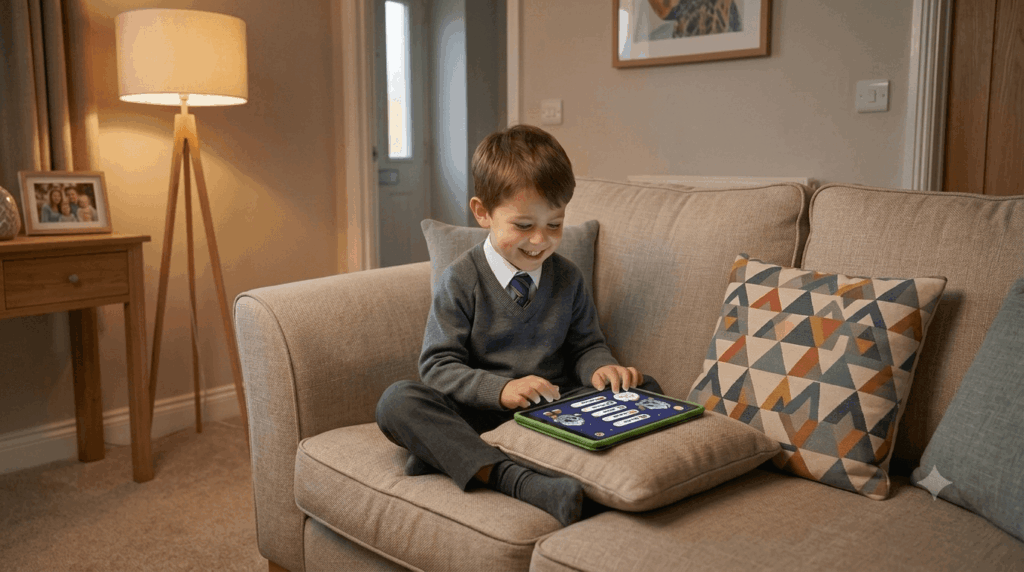
Each game works through the same calm, consistent mechanic: a sentence appears on screen, a real human voice delivers a spoken prompt, and the child taps what they think is the right word or element. No definitions. No rules explained. No penalty for a wrong answer. Just repeated, low-stakes encounters with grammatical patterns across many different sentences and contexts — which is what builds intuitive recognition over time.
For bilingual children specifically, the games are available across Parlini Land’s full range of supported languages — English, Spanish, Greek, Irish, Hindi, Arabic, German, Italian, French, Swedish, and Polish — with real human voiceovers in each. This means a child can encounter grammatical patterns in both of their languages within the same app, building the kind of cross-language awareness that is one of the genuine cognitive benefits of bilingual literacy development.
The games do not teach grammar in the traditional sense. They create the conditions in which grammatical awareness grows naturally — through listening, through repetition, through play — in both of a bilingual child’s languages, at exactly the age when that kind of exposure is most productive.
Can you teach grammar to a 5-year-old?
Not through rules and definitions — but you can build grammatical awareness through play and listening, which is more effective at this age anyway. Five-year-olds are developing metalinguistic awareness, which makes them receptive to pattern recognition games that introduce grammatical categories through repeated low-stakes exposure rather than formal instruction.
Do bilingual children find grammar harder to learn?
No — research suggests the opposite. Bilingual children arrive at conscious grammar learning with an implicit understanding that language can be structured in more than one way, which tends to make them faster at grasping the concept of word categories. They are not learning that nouns and verbs exist as a new idea — they are finding labels for patterns their brain has already been tracking in two languages.
What grammar concepts are appropriate for age 5?
Simple word categories — nouns, verbs, and adjectives — are the most accessible starting point for five-year-olds. At this age, the goal is not definition but recognition: the ability to identify which word in a sentence is the noun, the verb, or the adjective through exposure and pattern recognition rather than explicit instruction.